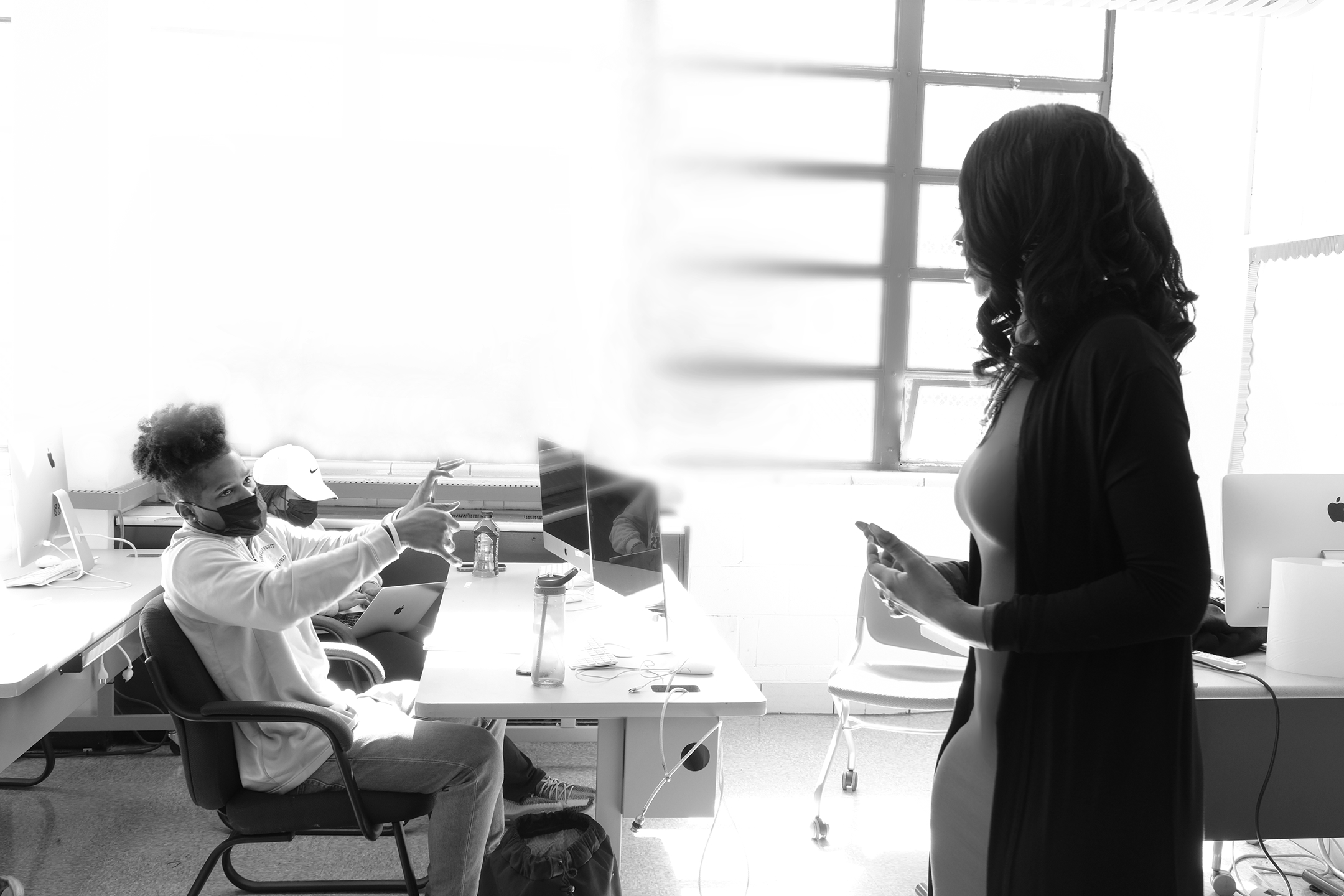
Workshops
Workshops on Media, Technology, and the Stories That Shape Everyday Life
I facilitate interactive workshops that help educators, organizations, and Black communities examine how media, technology, race, and storytelling shape everyday life. Participants develop practical ways to evaluate information, recognize harmful narratives, and engage more critically with the media they encounter.
Each session brings research into conversation with participants’ experiences through guided discussion, reflection, and applied activities. Workshops are tailored to your group's needs, whether the focus is misinformation, media representation, digital technology, organizational communication, or community life.
Find the Right Workshop for Your Group
All workshop titles and focus statements are listed below. Select any workshop to read its full description.
Educators & Schools
For teachers, school leaders, universities, student groups, and education-centered organizations.
Race and Media Literacy A clear introduction to race, media, and power.
Drawing on the frameworks in my book, participants examine how race and power shape media representation and practice using questions and examples they can bring into their own teaching.
Teaching Through Polarization Helping students think clearly in divided times.
Participants explore strategies for facilitating classroom conversations about race, media, misinformation, and civic life when students bring different assumptions, experiences, and media habits.
AI, Algorithms, and Today’s Students How digital systems shape what students see, believe, create, and trust.
Participants examine examples of AI, algorithmic bias, and platform design and develop questions they can use to help students assess digital systems and their effects on learning, identity, and information.
Media Literacy Across the Curriculum Practical tools for classrooms beyond journalism and communication.
Participants identify opportunities to integrate media literacy into their subjects and explore adaptable activities for writing, history, journalism, communication, civic education, social studies, and student leadership.
Nonprofits & Mission-Driven Organizations
For nonprofits, foundations, advocacy groups, cultural organizations, and institutions serving the public.
Communicating in a Changing Public Climate Helping organizations speak clearly when the language around race and justice is under pressure.
Participants examine communication challenges surrounding race, equity, inclusion, and justice and practice framing mission-centered messages with clarity, credibility, and care.
Mission-Driven Messaging After DEI Protecting the mission without retreating from justice.
Participants work through ways to explain their mission, articulate their values, and communicate responsibly in a public climate marked by opposition to DEI initiatives.
Building Trust in Uncertain Times Clear communication for overwhelmed, skeptical, or divided audiences.
Participants examine what builds or damages public trust and explore communication practices that support consistency, transparency, and care.
Narrative Power for Nonprofits The stories organizations tell, inherit, and need to challenge.
Participants identify narratives their organizations reproduce or encounter, assess how those stories shape perceptions of the communities they serve, and explore ways to challenge harmful assumptions.
Black Women’s Groups & Community Spaces
For women’s ministries, sororities, professional groups, book clubs, senior groups, mother-daughter groups, and intergenerational Black women’s spaces.
Social Media and the Health of Black Relationships How platforms shape friendship, dating, family, conflict, comparison, and community.
Through guided conversation and reflection, participants examine how social media shapes Black relationships and explore approaches to connection, conflict, care, and digital boundaries.
Protecting Our Peace in the Digital Age A practical conversation about media overload, online conflict, outrage, and comparison.
Participants reflect on the effects of constant digital exposure, online conflict, and comparison, then identify practical strategies for more intentional media use.
How Technology Is Changing Black Community Life AI, algorithms, social media, misinformation, and the future of connection.
Participants explore how technology is reshaping Black community life and discuss ways to respond thoughtfully to changes in relationships, organizing, learning, and information sharing.
The Stories We Inherit and the Stories We Pass On An interactive exploration of race, media, memory, family, and responsibility.
Through guided reflection and discussion, participants examine the stories that shape how Black communities are seen and how we see ourselves, then consider which narratives to challenge and which stories to pass on.
Churches & Faith Communities
For congregations, women’s ministries, senior ministries, civic ministries, and faith-based organizations seeking discernment in a confusing media moment.
Navigating Truth in the Digital Age How to recognize misinformation and become better stewards of what we share.
Participants practice questions and verification habits that help faith communities slow down reactions and respond to misinformation with wisdom, care, and shared responsibility.
Media and the Stories That Shape Our Communities The stories society repeats until they feel like common sense.
Participants learn to recognize master narratives and racial master narratives across media, education, politics, entertainment, and social platforms, and explore ways to challenge harmful stories through truth, history, and community knowledge.
Raising Media-Literate Families A practical session for parents, grandparents, caregivers, and church leaders.
Parents, caregivers, and faith leaders explore practical questions and conversation strategies for helping young people think critically about media, technology, race, identity, and online life.
Faith, Discernment, and Digital Life Truth, trust, community, and responsibility in a noisy media culture.
Participants reflect on digital habits, fear, outrage, and trust, and practice approaches to discussing information responsibly within faith communities.
How the Workshops Work
Flexible Formats
Workshops are offered as interactive trainings, facilitated discussions, and multi-session learning experiences. Activities and discussion are adapted to the audience and setting.
Tailored to Your Group
Each session is adapted to your group’s audience, goals, questions, and level of familiarity with the topic.
Practical Takeaways
Participants leave with clear language, shared frameworks, useful questions, and tools they can apply in their own settings.
Interested in bringing an interactive learning experience to your group or organization?
Request a Workshop